What Is a Rotameter Flow Meter for Industrial Use?
In many industrial plants, engineers need a simple, reliable and cost-effective way to monitor the flow of liquids and gases. A rotameter flow meter is one of the most practical solutions for this. It provides direct visual indication of flow without the need for power, while offering good repeatability and low operating costs.
This guide explains what a rotameter is, how it works, where it is used, and how to select and install it correctly. It is written for engineers and maintenance teams who design and operate industrial processes and who are evaluating variable area rotameter flow meters for their systems.

What Is a Rotameter Flow Meter?
A rotameter is a variable area flow meter that measures the volumetric flow rate of a fluid in a closed tube. The device consists of a tapered tube and a free moving float. As flow increases, the float moves to a higher position, and the flow rate is read from a calibrated scale.
Key characteristics:
- Designed for liquid and gas flow measurement
- Used for local indication of flow directly in the line
- Suitable for continuous monitoring and simple control tasks
- Available as glass tube rotameters and metal tube rotameters for more demanding conditions
Dimens offers variable area solutions as part of its industrial flow meter portfolio. You can see the wider flow instrumentation range here: Dimens flow meter types .
How Does a Rotameter Work? The Variable Area Principle
A rotameter flow meter operates on the variable area principle:
- The tube is narrow at the bottom and wider at the top.
- A float is positioned inside the tube.
- Fluid enters from the bottom and flows upward around the float.
- As flow increases, the upward force of the fluid and buoyancy push the float upward.
- The float stops at a point where the upward forces (fluid drag and buoyancy) and the downward force (gravity) are in balance.
- The position of the float corresponds to a specific flow rate on the scale.
In practice, flow indication is proportional to the height of the float. Pressure loss across a rotameter is relatively low and stable within the operating range, and a rotameter flow indicator provides an immediate visual signal of whether flow is within the expected band.
Construction and Materials of Industrial Rotameters
Tube Materials
Industrial rotameter flow meters are available in different tube constructions, depending on the medium and process conditions:
-
Glass tube rotameter
Used for clean liquids and gases, with a transparent tube for direct float visibility. Common in OEM machines, water treatment skids and laboratory systems. -
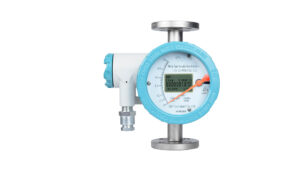
Metal tube rotameter
Used for higher pressure and temperature applications. Suitable for aggressive or opaque fluids, with flow indication via an external scale, pointer or local indicator.
Float Materials
Floats are typically made from:
- Stainless steel for general industrial use
- PTFE or other plastics for corrosive media
- Special alloys or ceramics for demanding chemical applications
The mass, shape and density of the float are designed to provide a specific flow range and accuracy for the selected rotameter flow meter.
Connection and Valve Options
Most industrial rotameters are available with:
- Threaded or flanged process connections
- Vertical mounting orientation with flow from bottom to top
- Integral needle valve for fine flow adjustment (adjustable valve rotameter)
For detailed product examples you can review RST Elektronik’s adjustable valve rotameters .
Types of Rotameter Flow Meters and When to Use Them
Glass Tube Rotameters
Glass tube designs are best for low to medium pressure liquids and gases. They provide direct visual reading of the float and scale and are widely used for cooling water, compressed air, nitrogen and other inert gases.
Metal Tube Rotameters
Metal tube rotameters are designed for higher pressure and temperature applications. They are suitable for process lines where glass is not acceptable and are often used for steam, aggressive chemicals and high pressure gas lines.
Purge Rotameters and Low Flow Rotameters
Purge and low flow rotameters are used for very low flow rates. Typical applications include instrument air purge, seal gas, sampling lines and analyser systems. They are frequently combined with a needle valve for precise control.
Rotameters with Transmitter or Switch
Some industrial designs can be supplied with:
- Limit switches for low or high flow alarms
- Analogue outputs, such as 4–20 mA, for integration into PLC or DCS systems
This turns a simple rotameter flow indicator into a more complete flow monitoring instrument.
Key Features and Advantages of Rotameter Flow Meters
Compared to many electronic flow meter technologies, a rotameter flow meter offers several practical advantages:
- No power required for local indication
- Simple and robust design with few moving parts
- Low pressure drop in the line
- Good repeatability in stable process conditions
- Fast visual feedback for operators
- Easy installation and commissioning
- Cost effective for multi-point measurement across a plant
These benefits make rotameters ideal in applications where relative flow control and monitoring are more important than very high absolute accuracy.
Typical Industrial Applications of Rotameter Flow Meters
Cooling Water and Utility Lines
Rotameters are widely used to monitor cooling water to heat exchangers, moulds and machines, confirm minimum flow through critical equipment and balance flows across multiple circuits.
Compressed Air and Gas Distribution
An air flow rotameter is often used in compressed air header branches, while a gas rotameter is applied for nitrogen, oxygen and other process gases. They are commonly installed to monitor purge and blanket gas flows.
Water Treatment, Filtration and Chemical Dosing
Rotameters provide local indication of filtration line flow, verify dosing streams and support visual control in pilot plants and small process units.
HVAC and Cleanroom Systems
In HVAC and cleanroom systems, rotameter flow meters are used to indicate air or gas circulation in critical environments and to monitor flows in air handling units and cleanroom supply lines.
Selecting the Right Rotameter for Your Process
When specifying a rotameter flow meter, engineers should consider:
-
Medium
Liquid or gas, clean or with particles, and chemical compatibility with tube and float. -
Flow range
Minimum and maximum normal operating flow and the required turndown ratio. -
Pressure and temperature
Maximum operating pressure, normal and peak temperature and whether a metal tube rotameter is required. -
Installation conditions
Pipe size, available straight length and vertical mounting space. -
Required output
Local visual indication only, alarm contacts or analogue output for PLC integration.
Dimens supports customers in selecting the correct flow meter type for each application. For an overview of all technologies, see: flow meter types by Dimens .
Rotameter Installation Guidelines and Best Practices
Correct installation is essential for accurate rotameter flow measurement.
- Install the rotameter vertically with flow direction from bottom to top.
- Avoid strong vibrations or pulsating flow that can cause the float to oscillate.
- Ensure the piping is properly aligned to avoid mechanical stress on the meter.
- Use isolation valves upstream and downstream for maintenance.
- Flush the line before commissioning to avoid particles sticking the float.
- For gas measurement, ensure correct pressure and temperature conditions relative to the calibration data.
These practices improve rotameter accuracy and extend the service life of the instrument.
Rotameter Flow Meter vs Other Flow Meter Technologies
In many plants, rotameters operate alongside other flow meter types such as electromagnetic, ultrasonic or Coriolis meters.
| Aspect | Rotameter Flow Meter | Electromagnetic / Ultrasonic | Coriolis |
|---|---|---|---|
| Power required | No for indication | Yes | Yes |
| Typical accuracy | Moderate, good repeatability | High | Very high |
| Suitable media | Liquids and gases | Mainly liquids (electromagnetic), liquids and some gases (ultrasonic) | Liquids and gases |
| Relative cost | Low | Medium | High |
| Main use | Local indication, simple control | Process control and billing | High-accuracy mass flow |
A rotameter is often the most economical choice where local indication, simplicity and robustness are more important than very high precision.
Common Issues, Troubleshooting and Maintenance
Typical issues with rotameter flow meters include:
-
Float sticking or not moving
Check for dirt or particles in the tube and confirm the rotameter is installed vertically. -
Unstable or bouncing float
Flow may be highly pulsating. For gas applications, consider damping options or an alternative meter type. -
Incorrect reading
Check process conditions against the calibration data and verify the scale units and reading point on the float. -
Valve control issues in adjustable valve models
The valve may be partially blocked. Clean the valve seat and check for contamination.
Regular visual inspection and periodic cleaning are usually sufficient to keep glass tube and metal tube rotameters operating reliably.
FAQ: Rotameter Flow Meter Basics
What is a rotameter used to measure?
A rotameter is used to measure the volumetric flow rate of liquids and gases in a closed pipe.
Is a rotameter a variable area flow meter?
Yes. A rotameter is a variable area flow meter because the annular area between the float and the tapered tube changes with flow and the float position indicates the flow rate.
Can a rotameter measure gas as well as liquid?
With appropriate sizing and materials, a rotameter can measure both liquids and gases such as water, compressed air, nitrogen and other process gases.
How accurate is a rotameter?
Industrial rotameters typically offer an accuracy of about two to five percent of full scale, with good repeatability when they are correctly sized, installed and operated within their design conditions.
Can a rotameter be installed horizontally?
Standard rotameter designs are intended for vertical installation with flow from bottom to top. Horizontal installation is not recommended unless the device is specifically engineered for that orientation.
What is the difference between a rotameter and other flow meters?
A rotameter is a mechanical variable area flow meter that provides simple visual indication without power and is very cost effective, while electronic flow meters such as electromagnetic, ultrasonic or Coriolis meters provide higher accuracy and electronic outputs at a higher cost.
Conclusion
A rotameter flow meter is a proven, robust and economical solution for industrial flow monitoring in water, gas and utility systems. When selected and installed correctly, it offers stable and repeatable flow indication with minimal maintenance effort.
Dimens, together with its technology partner RST Elektronik, supports industrial customers in choosing the right rotameter types and other flow meter technologies for each application, from low-flow purge lines to high pressure metal tube designs.
For project support or product selection, your next step is to review the available flow meter types and contact the Dimens team for technical consultation.
In this article
Related products
 ProductMetal Tube Rotameter – Durable and Precise Flow MeasurementView product →
 ProductPlastic Tube Flow Meter LZS Series | Industrial RotameterView product →