Flow Measurement
Coriolis Flow Meter vs Other Flow Meters
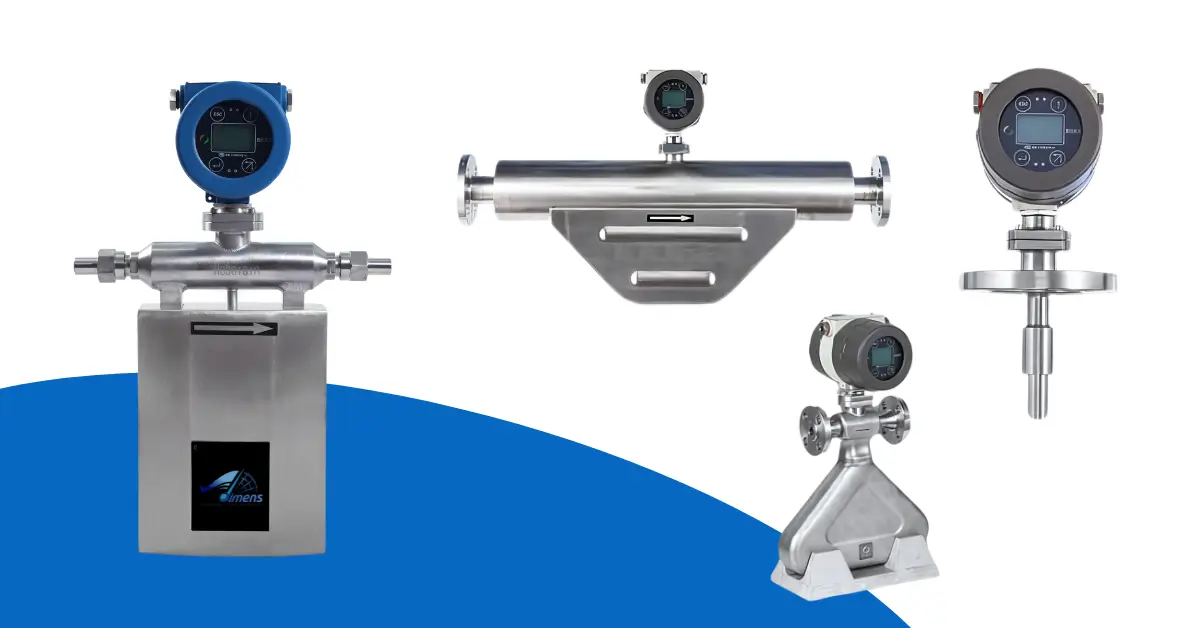
A Coriolis flow meter measures mass directly, while most alternatives infer volume. That single difference decides accuracy, cost and the right fit for your process. This guide compares the Coriolis flow meter against electromagnetic, ultrasonic and turbine technologies, so engineers can specify with confidence.
What is a Coriolis flow meter?
A Coriolis flow meter measures mass flow rate by detecting the Coriolis effect inside one or more vibrating tubes. As fluid passes through a tube oscillating at its natural frequency, the moving mass twists the tube slightly. Sensors at the inlet and outlet detect the phase shift between these points, and that shift is directly proportional to mass flow rate.
Because the measurement is tied to mass rather than volume, the device does not need temperature or pressure compensation to stay accurate. The same device also reports fluid density and temperature, making it a true multivariable instrument. This is the core reason it behaves so differently from volumetric technologies such as turbine or electromagnetic meters.
Mass flow versus volumetric flow: the core distinction
Every flow meter falls into one of two camps. Mass flow meters measure how much matter passes through the pipe, independent of how that fluid expands or contracts. Volumetric flow meters measure how much space the fluid occupies, which shifts with temperature and pressure. For custody transfer, batching and chemical dosing, where what matters is the actual quantity delivered, mass measurement removes a whole class of error.
It is the most widely used mass technology. Electromagnetic, ultrasonic and turbine meters are all volumetric. Understanding this split is the first step in any honest comparison.
Coriolis flow meter vs other flow meters: comparison table
The table below summarises how a Coriolis flow meter compares with the three most common alternatives across the parameters that drive selection.
| Parameter | Coriolis | Electromagnetic | Ultrasonic | Turbine |
|---|---|---|---|---|
| Measures | Mass (direct) | Volume | Volume | Volume |
| Typical accuracy | Up to ±0.1% | ±0.25 to ±0.5% | ±1% (degrades with bubbles) | ±0.25 to ±0.5% |
| Fluid requirement | Any liquid or gas | Conductive liquids only | Clean liquids preferred | Clean, low-viscosity |
| Moving parts | None | None | None | Yes (rotor wears) |
| Pressure loss | Moderate | None (open bore) | None (clamp-on) | Moderate |
| Density output | Yes | No | No | No |
| Relative cost | Highest | Medium | Medium | Low |
Accuracy figures reflect typical manufacturer specifications under recommended operating conditions and vary by model and installation.
Coriolis vs electromagnetic flow meter
An electromagnetic flow meter, or magmeter, applies Faraday’s law to measure the volumetric flow of conductive liquids. It has no moving parts, no obstruction and no pressure loss, which makes it the workhorse for water, wastewater and abrasive slurries. However, it cannot measure hydrocarbons, deionised water or any gas, because those fluids are non-conductive.
A Coriolis meter works with any fluid, including gases, and delivers higher accuracy plus density data. The trade-off is cost and a moderate pressure drop. Choose the magmeter when the fluid is conductive and budget matters; choose Coriolis when you need mass accuracy or the fluid is non-conductive. Our overview of magmeter flow meter applications covers the conductive-liquid case in more depth.
Coriolis vs ultrasonic flow meter
Ultrasonic flow meters measure velocity using the transit-time difference of sound pulses across the flow. Clamp-on models install without cutting the pipe, which is ideal for retrofits and large diameters. The weakness is sensitivity: accuracy is typically around ±1% and degrades with scale build-up, pipe condition changes or entrained air, with measurement failing once gas bubbles exceed roughly two per cent.
A Coriolis meter is unaffected by pipe condition and holds its accuracy in difficult fluids, but it must be installed inline and costs more. Specify ultrasonic for non-invasive monitoring of clean liquids in large pipes; specify Coriolis where precision is non-negotiable.
Coriolis vs turbine flow meter
A turbine flow meter uses a rotor that spins in proportion to flow velocity, giving good accuracy and a wide turndown for clean, low-viscosity liquids at a low price. Its moving rotor is also its limitation: particulates and viscosity changes cause bearing wear and calibration drift, so it is best kept to non-critical duties with clean fluids.
A Coriolis meter has no moving parts, tolerates viscous and multiphase fluids and adds density measurement, which is why it replaces turbine meters in high-value or demanding applications. For the mechanical principle and where turbines still make sense, see our guide to turbine flow meters and their benefits.
When to choose a Coriolis flow meter
A Coriolis meter is the right specification when one or more of these conditions apply:
- Mass flow accuracy is critical, such as custody transfer where money changes hands on the measurement.
- The fluid is non-conductive, viscous, multiphase or of variable composition.
- Precise batching, blending or dosing is required in chemicals, food, beverage or pharmaceutical production.
- Density or concentration data is needed alongside flow from a single device.
- Long-term reliability matters and a maintenance-free, no-moving-parts design justifies the higher initial cost.
Where the fluid is conductive and the budget is tight, an electromagnetic meter is often the better value. Where non-invasive installation on large pipes is the priority, ultrasonic wins. The Coriolis meter earns its premium when accuracy, fluid flexibility and multivariable data outweigh cost.
Specifying flow meters with Dimens
Dimens is the measurement instrument brand of RST Elektronik (RST Ölçü Kontrol Enstrümanları ve Otomasyon Hizmetleri), a Turkish engineering company supplying flow, level, pressure and temperature instrumentation across industrial processes. Selecting the correct flow meter is an engineering decision, not a catalogue choice, which is why our team evaluates the actual process conditions, fluid type, accuracy target and installation constraints before recommending a technology.
Beyond supply, Dimens and RST Elektronik provide flow meter calibration, maintenance and automation support, so a Coriolis meter or any volumetric alternative keeps performing accurately throughout its service life. That combination of specification expertise and after-sales service is what turns the comparison above into the right instrument for your application.
Frequently asked questions
Is a Coriolis flow meter more accurate than other flow meters?
Yes. A Coriolis flow meter typically achieves up to ±0.1% accuracy by measuring mass directly, compared with ±0.25 to ±0.5% for electromagnetic and turbine meters and around ±1% for ultrasonic meters.
Can a Coriolis flow meter measure gas?
Yes. Unlike electromagnetic meters, which need conductive liquids, a Coriolis flow meter measures mass flow for liquids and gases alike, which is one of its main advantages over volumetric technologies.
Why is a Coriolis flow meter more expensive?
The higher cost reflects precision-engineered vibrating tubes, integrated electronics and the ability to measure mass, density and temperature in one device. In critical applications this is offset by reduced measurement error and lower lifetime maintenance.
Which flow meter is best for conductive liquids on a budget?
An electromagnetic flow meter is usually the best value for clean or dirty conductive liquids, offering no moving parts and no pressure loss at a lower cost than a Coriolis flow meter.
Specify the right flow meter for your process
Talk to the Dimens measurement team at RST Elektronik for help selecting and calibrating flow, level, pressure or temperature instruments suited to your application.
In this article